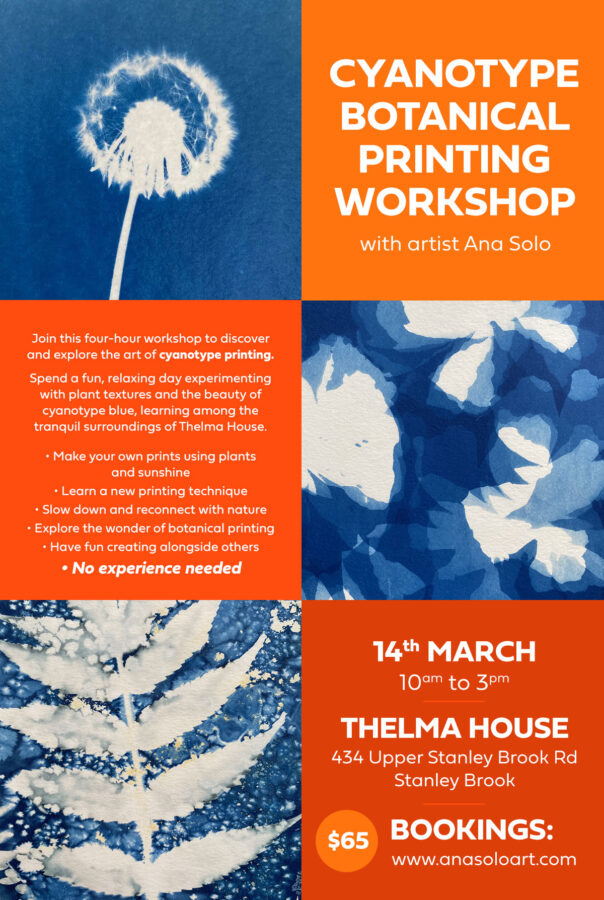
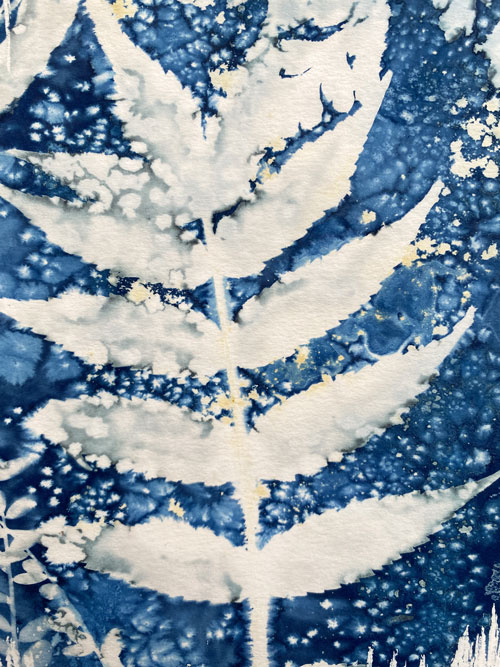
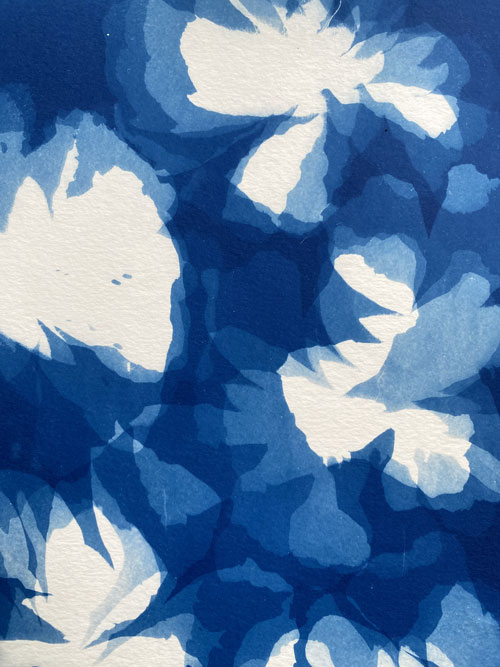
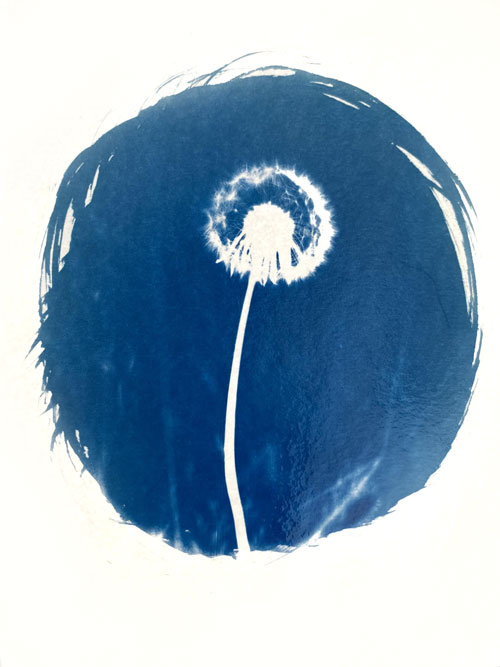
Cyanotype Botanical Printing Workshop at Thelma House
Saturday, 14th March – Limited spaces, book now!
| Place |
Thelma House – 434 Upper Stanley Brook Rd, Stanley Brook
Click here for more information about Thelma House |
| Date and Time |
Saturday, 14th March, 10am to 3pm (lunch break at 1pm) |
| Level |
Perfect for beginners — no drawing or “being good at art” required. |
| Workshop Fee |
$65 |
| Includes |
All materials provided and your own unique sun prints to take home. |
| Refreshments |
Tea, coffee available. Bring your own lunch. |
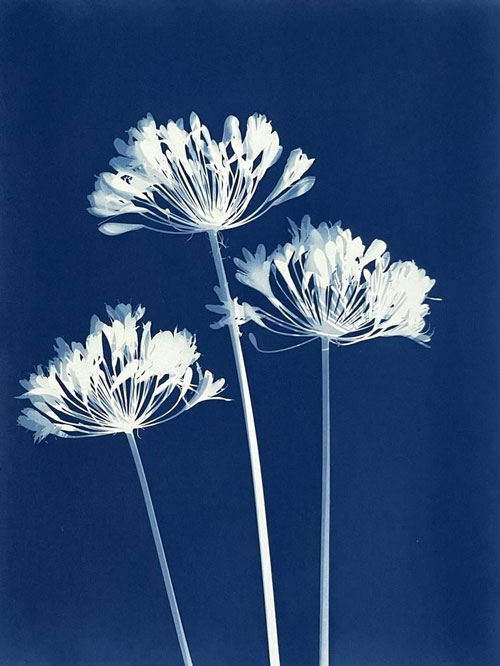
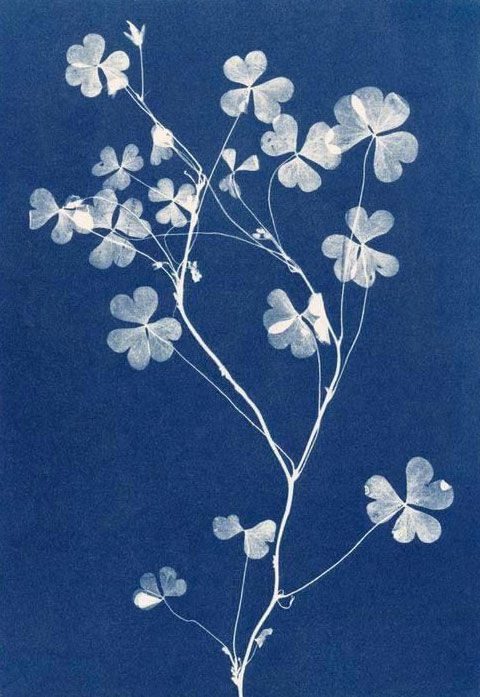
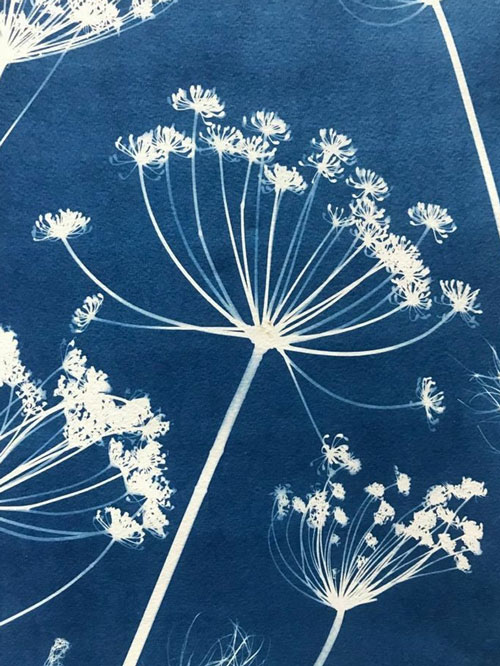
Discover & explore botanical cyanotype printing — a creative, sun-powered process used by artists, photographers and botanists for centuries. Also called sun prints, cyanotype is made using a light-sensitive solution that reacts to UV light to produce its beautiful deep blue.
During this workshop, you’ll enjoy a fun, relaxed day using natural plants and sunlight to create your own beautiful botanical prints.
Attend and enjoy learning in the tranquil environment of Thelma House.
You’ll be guided step-by-step with a few simple demos, then you’ll get plenty of time to jump in and make your own prints. We’ll keep it relaxed and playful, so you can experiment, try things out, and enjoy discovering and sharing what you create along the way.
I’ll have all the materials ready for you, and you don’t need any experience—just bring your curiosity and creativity. If you’d like to add a personal touch to your prints, you’re welcome to bring a few items from the list below.
Objects you can bring
If you’d like, bring along a few personal items, plants or stencils to make your prints extra meaningful. But no stress if you don’t—nature has plenty of beautiful shapes and textures for us to work with.
| Item |
Examples / notes |
| Found objects |
Leaves, flowers, lace, or anything with interesting shapes or textures to create your own unique prints. |
| Personal stencils |
If you want to create detailed patterns or designs, bring your own stencils or sketches. |
| Creative ideas |
Feel free to bring anything that inspires you, whether it’s nature-based, graphic, or personal! |
| Apron |
To protect your clothes from any accidental splashes. |
| Gloves |
To protect your hands (I will have spare ones). |
Note: All materials for the cyanotype process will be provided, so there’s no need to bring any special equipment or paper.
What We’ll Be Doing
| Section |
What we’ll do |
| Welcome & Introduction |
- Introduction
- Brief history of cyanotype
- How it works
- Show examples of cyanotypes
- Safety guidelines
|
| Testing Sunlight Strength |
Sunlight Strength Test
- Use pre-coated cyanotype test strips.
- Place your chosen leafs, flowers, etc. on strips.
- Expose in direct sun while timing.
- Compare development at different amounts of time.
Discussion: Adjust exposure times based on the day’s UV intensity.
|
| Preparing the Paper & Composing the Print |
Coating the Paper
- Demonstration of how to mix and apply cyanotype solution evenly.
Designing the Print
- Arrange objects on pre-coated paper.
|
| Exposure & Development |
Placing & Exposing the Prints
- Arrange materials on dried, coated paper under a glass sheet or in a contact frame.
- Exposure times: Based on the sunlight test earlier.
Developing the Cyanotype
- Wash in running water trays to remove unexposed chemicals.
Drying the Prints
|
| Creative Techniques & Experimentation |
Layering & Double Exposure
- Expose once, rearrange objects, expose again for layered effects.
Wet Cyanotype (for abstract textures)
- Mist or drizzle vinegar, lemon juice, soap bubbles, or hydrogen peroxide before exposure.
- Sprinkle turmeric, paprika, or salt for unexpected color shifts.
Toning Techniques, if time allows (changing blue to brown r muted tones)
- Baking Soda – Softens tones.
- Bleaching with Washing Soda – Lightens prints and adds contrast.
- Tea or Coffee – Warm brown/sepia tones.
Masking & Resist Techniques
- Use masking tape, wax crayons, or cut-out shapes before exposing.
Photographic Negatives & Text Integration
- Print photos or text onto acetate sheets for detailed images.
|
| Sharing & Reflection |
- Participants share their prints and discuss results.
|